
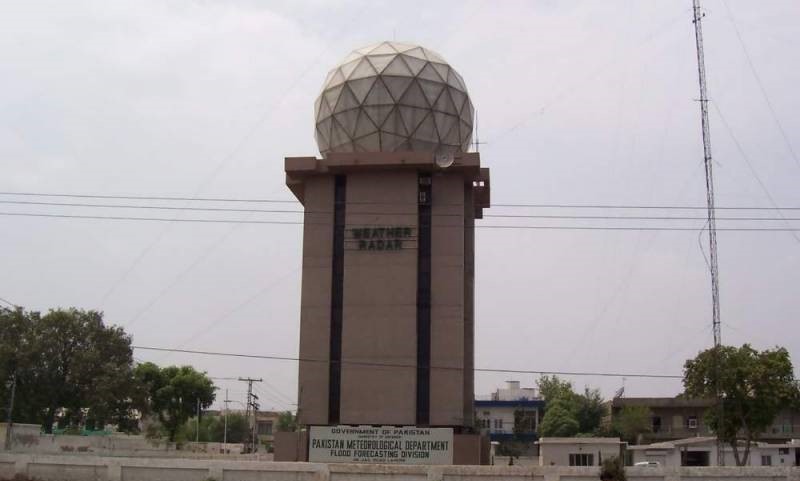
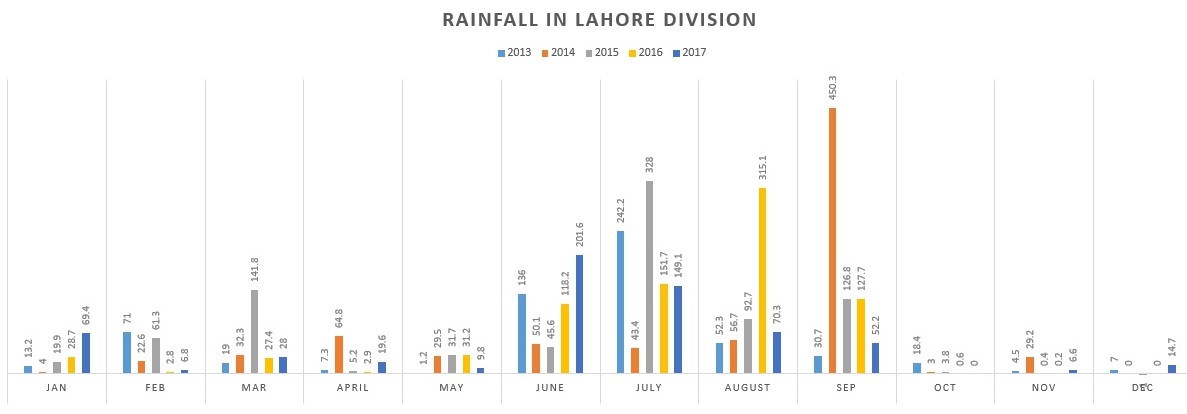
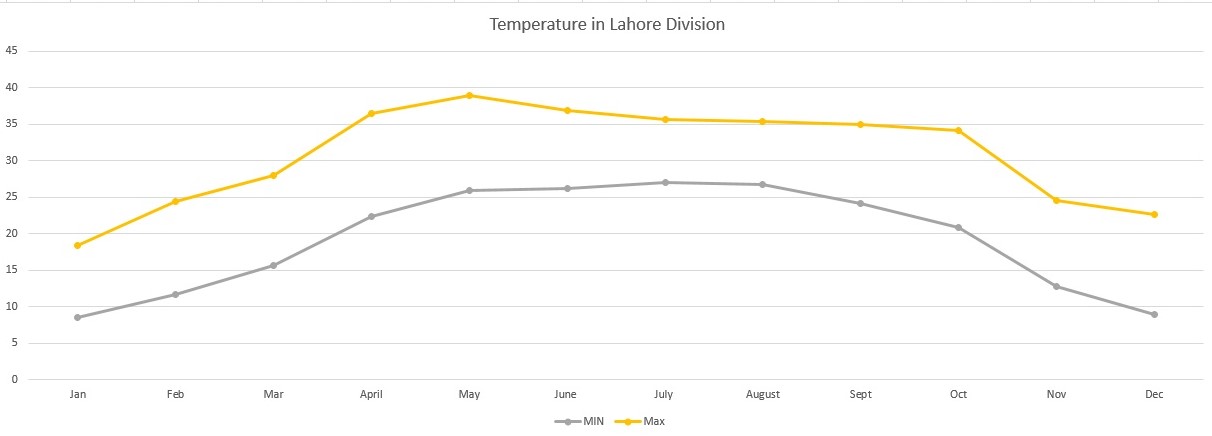
 Lahore Division features a five-season, semi-arid climate: foggy winter (Nov15 – Feb 15) with few western disturbances causing rain; pleasant spring (Feb 15 - Apr 15); summer (Apr – Jun) with dust, rain storms and heat wave periods; rainy monsoon (Jul - Sep 16); and dry autumn (Sep 16 - Nov 14). The hottest month is June, where average highs routinely exceed 40°C (104°F). The wettest month is July, with heavy rainfalls and evening thunderstorms with the possibility of cloudbursts. The coolest month is January with dense fog. The city’s highest maximum temperature was 48.3°C (118.9°F) recorded on May 30, 1944 while 48°C (118°F) was recorded on June 09, 2007. The lowest temperature recorded in Lahore is –1°C, recorded on 13 January 1967.
Pakistan Meteorological Department (PMD) provides information on weather, climate and geophysical phenomenon with the aim of traffic safety in air, on land and sea, mitigation of disaster, agriculture development based on climate potential of the country, climate change, impact assessment, future projections of climate and adaptation options in different sectors: Pakistan Meteorological Department Helpline: 051-111638-638
Water and Sanitation Agency Lahore is responsible for planning, designing and construction of water supply, sewerage and drainage facilities. WASA Helpline: 1334
The Provincial Disaster Management Authority (PDMA) manages the spectrum of all types of disasters by adopting various techniques in disaster risk reduction by planning at all levels and enhancing the capacities for disaster preparedness, response and recovery. Provincial Disaster Management Authority Helpline: 1129
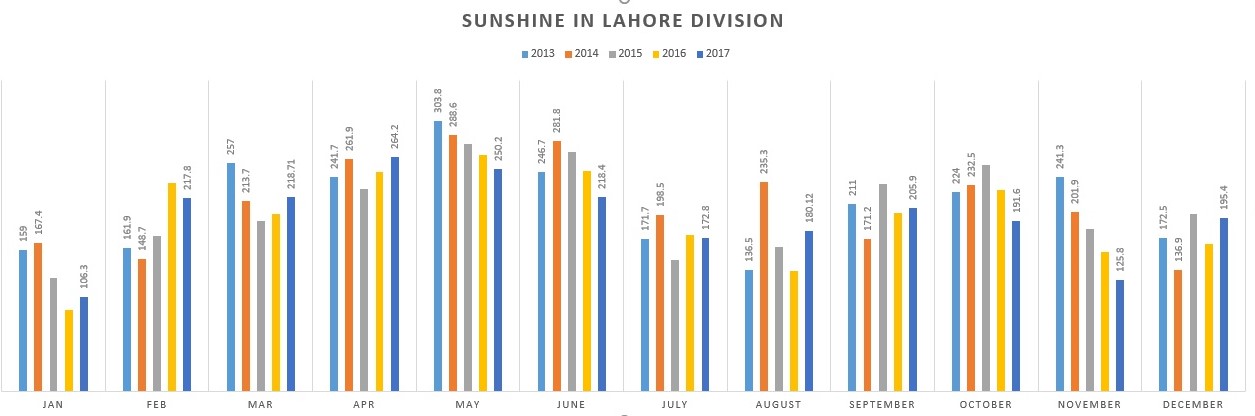
Weather Averages
 |
 |
 |